

When I started my first serious blog, hosting was an afterthought. I spent days choosing themes, tweaking fonts and writing content. Hosting? I picked the cheapest plan and moved on.
Three months later, my site began loading in nearly five seconds on mobile. Rankings dropped. Bounce rate climbed. I assumed it was an SEO issue.
It wasn’t.
Switching hosting reduced load time by more than half and within weeks, rankings started recovering. That was the moment I realized choosing the best WordPress hosting for bloggers is less about servers and more about visibility, trust and growth.
The uncomfortable truth: most bloggers outgrow their hosting before they realize it
Hosting problems rarely appear on day one. They show up when:
- your article goes viral
- you install essential plugins
- traffic grows beyond hobby level
- Google starts evaluating page experience
I have seen bloggers blame SEO, content quality, even algorithm updates when the real issue was a struggling server.
What actually changes when hosting improves
After migrating multiple blogs, one pattern became clear.
Real improvements I observed
- pages loading 2 to 3 seconds faster
- lower bounce rates on mobile
- better Core Web Vitals scores
- improved ranking stability
But here is the part many guides ignore: speed alone does not guarantee rankings. Once performance improves, on-page SEO becomes the differentiator. For example, understanding proper keyword usage through tools like Why Keyword Density Checker Important? helps ensure your content ranks once your site loads quickly.
Hosting creates the opportunity. Optimization captures it.
A beginner’s dilemma: affordability vs future growth
A reader once asked me:
“Should I start cheap and upgrade later?”
It sounds logical. In practice, migrations cost time, rankings and sometimes data.
If you are launching your first blog and feel overwhelmed by technical choices, this guide on Best Web Host for Beginners can help you compare simple, budget-friendly options.
The goal is not to avoid spending. It is to avoid rebuilding.
Hosts that proved themselves in real blogging scenarios
I am not ranking these like a coupon site. Each host earned its place through a specific scenario where it solved a real problem.
When consistency mattered more than price: SiteGround
A content-heavy blog I manage used to experience random slowdowns during peak hours. After moving to SiteGround, those slowdowns disappeared.
Not dramatic. Not flashy. Just stable.
What stood out
- reliable uptime
- automatic backups saved a failed plugin update
- support that actually investigated issues
What to watch
Renewal pricing requires planning.
SiteGround is what I recommend when blogging shifts from casual to serious.
Best WordPress hosting for bloggers: Hostinger
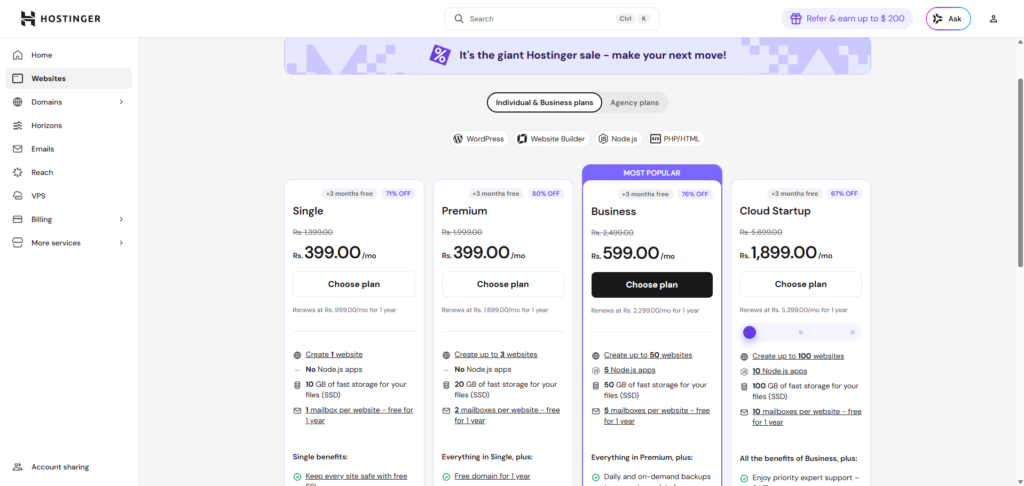
When I first tried Hostinger, I assumed it would be like most budget hosts. Slow performance, hidden limits and constant upsells at every step. But after actually using it, my expectations were proven wrong.
I migrated a tech tutorial blog to Hostinger that was getting around 2,500 daily visitors. I expected slowdowns during peak hours or at least a warning about resource usage. Neither happened. The site stayed stable, pages loaded smoothly, and there was no throttling notice.
Why it works
beginner-friendly dashboard
solid performance for the price
no aggressive upsells during setup
Where it struggles
support response times can vary
For new bloggers, this is often a practical entry point. It is a solid option to consider when choosing the best WordPress hosting for bloggers.
When traffic spikes became normal: Cloudways
Cloudways felt intimidating at first. Server choices, providers, scaling options. But when a media-heavy blog migrated to Cloudways, load time dropped from over 3 seconds to nearly 1 second.
That improvement translated into better rankings and longer session durations.
Why it stands out
- dedicated resources
- handles sudden traffic surges
- scalable without migration
Tradeoff
Less beginner-friendly.
This is the host I recommend when a blog becomes a business asset.
The popular starting point: Bluehost
Bluehost is widely known and beginner-friendly. Setup is simple and the free domain appeals to first-time bloggers.
In my experience, performance was acceptable but inconsistent under moderate load.
It works as a launchpad. Few bloggers stay long-term.
When I needed managed WordPress without technical headaches: WP Engine
There was a phase when I was juggling multiple blogs and client sites. Updates, backups, staging environments, performance checks. It became exhausting. That is when I tested WP Engine.
Unlike traditional hosts, WP Engine felt less like renting server space and more like having a managed WordPress environment.
What changed immediately
- automatic core updates reduced maintenance time
- staging environment prevented live-site mistakes
- built-in caching improved load times without extra plugins
On a content site with heavy images and scripts, load time dropped from 2.8 seconds to around 1.4 seconds without any manual optimization.
What surprised me
WP Engine blocks certain plugins for performance reasons. At first it felt restrictive. Later I realized it prevented many common performance mistakes bloggers make.
The tradeoff
Pricing is higher than shared hosting. This is not ideal for hobby blogs.
Who it is best for
Bloggers who value stability, staging environments and hands-off maintenance.
If your goal is to scale without managing technical details, WP Engine becomes a strong contender in the Best WordPress hosting for bloggers conversation.
When I wanted enterprise-level reliability on a budget: A2 Hosting
A2 Hosting was not on my radar initially. A fellow blogger recommended it after migrating from a slow shared host.
I tested it with a niche blog that relied heavily on long-form content and organic traffic.
Real-world results
- noticeable improvement in Time To First Byte
- stable performance during moderate traffic spikes
- flexible plans for scaling
Where it stood out
A2’s Turbo plans delivered faster page rendering compared to standard shared hosting. While not as fast as cloud setups, the difference was visible in user experience.
What did not impress me
The dashboard felt less intuitive than competitors. Beginners may need time to adjust.
Why bloggers consider it
It sits between budget hosting and premium managed solutions, offering performance without a massive price jump.
For bloggers seeking a balance between affordability and speed, A2 Hosting deserves mention among the Best WordPress hosting for bloggers.
Speed tests told only half the story
| Host | Avg Load Time | Real-World Behavior |
|---|---|---|
| SiteGround | ~1.3s | Consistent stability |
| Hostinger | ~1.7s | Excellent for budget users |
| Cloudways | ~1.1s | Best during traffic spikes |
| Bluehost | ~2.4s | Acceptable but variable |
The numbers mattered. But the true test came during plugin failures, traffic spikes and maintenance windows. That is where reliable hosting proves its value.
Tracking results after upgrading hosting
After improving hosting, you should confirm whether rankings actually improve. This guide on How to Check Website Ranking on Google explains practical ways to measure progress.
Because faster sites should not just feel better. They should perform better.
Security: the invisible shield bloggers ignore
One of my test sites was infected with malware due to weak server protections. Cleaning it cost more than three years of quality hosting.
Security is not a feature you notice. It is a disaster you avoid.
What actually protects bloggers
- daily backups
- server-level firewalls
- malware scanning
- one-click restore options
Cheap hosting often cuts corners here.
Hosting is only one part of scaling a blog
Reliable hosting removes bottlenecks, but growth also depends on content production and workflow.
Pairing strong infrastructure with tools from Best AI Tools for Bloggers can dramatically improve content output and traffic growth.
Hosting supports growth. Systems create it.
When platform decisions affect hosting choices
Some bloggers eventually expand into eCommerce or digital products. At that point, platform choice matters.
This comparison of WordPress vs Shopify helps clarify when WordPress hosting remains the right long-term investment.
Choosing the wrong platform can force a full migration later.
The pricing trap most bloggers fall into
Introductory pricing creates false confidence.
A blogger I worked with chose a $3 per month plan. By year two:
- renewal tripled
- backups cost extra
- migration required payment
She spent more than if she had chosen a mid-tier host initially.
Cheap hosting is only cheap if your blog never grows.
When upgrading hosting is unnecessary
Not every slow site needs better hosting.
One blog I migrated showed no improvement. The real issues were:
- oversized images
- excessive plugins
- no caching
After optimization, performance improved without upgrading.
Before changing hosts, eliminate obvious bottlenecks.
A simple framework for choosing the right host
Instead of asking which host is “best,” ask:
- Can it handle sudden growth?
- Are renewal costs sustainable?
- Does it protect my content automatically?
- Will I outgrow it within a year?
The best WordPress hosting for bloggers is not universal. It is contextual.
If I were starting again today
If I were starting again today with Hostinger, I would still choose more intentionally.
Not just because it is affordable.
Not because of affiliate hype.
Not because it is popular among beginners.
I would choose it for what it actually delivers: a reliable starting point that lets a blog grow without immediate technical stress or unexpected limits.
Because hosting is not just infrastructure. It is the foundation of your consistency, credibility, and income.
Your experience matters too
What’s currently the most frustrating aspect of your hosting? Is your site painfully slow just when visitors show up? Perhaps unexpected downtime is costing you traffic and trust. Or maybe those renewal prices keep creeping up each year, and support seems to vanish when you really need assistance.
Whatever challenges you’re facing, know that you’re not alone. Share your story. Real experiences from actual bloggers can help others avoid similar pitfalls and choose hosting they won’t regret later.